
Taste it
See food & drink: Garden tours and cocktail workshopsGarden tours and cocktail workshops
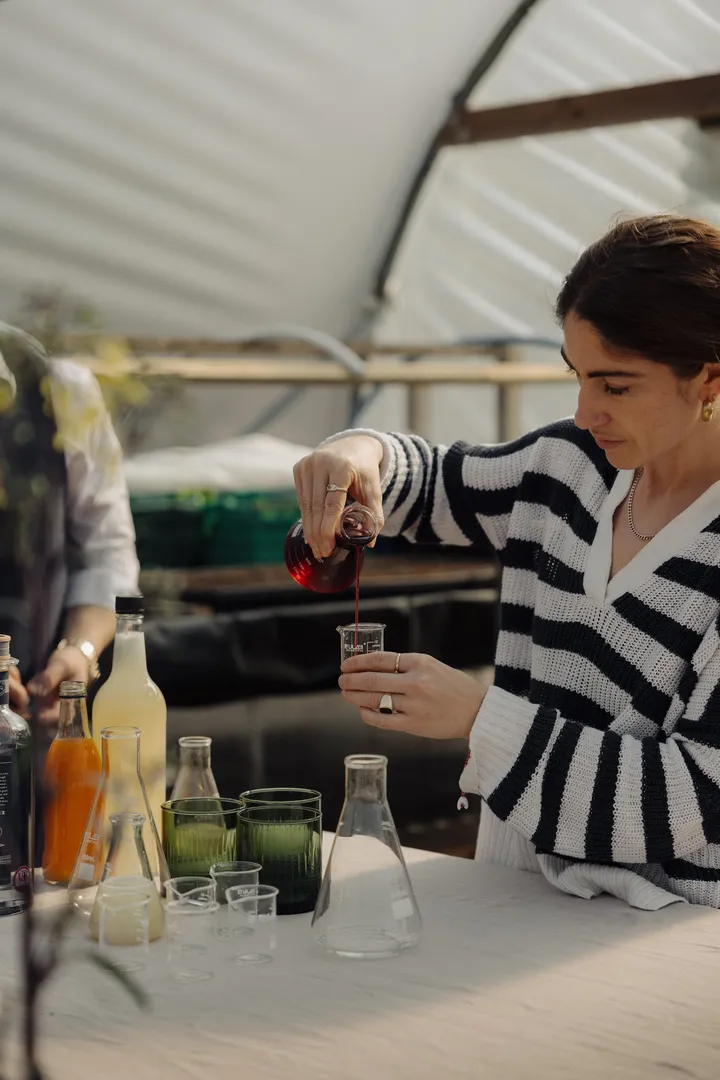
Walk the polytunnel, forage the grounds and mix your own drinks with our bar team.
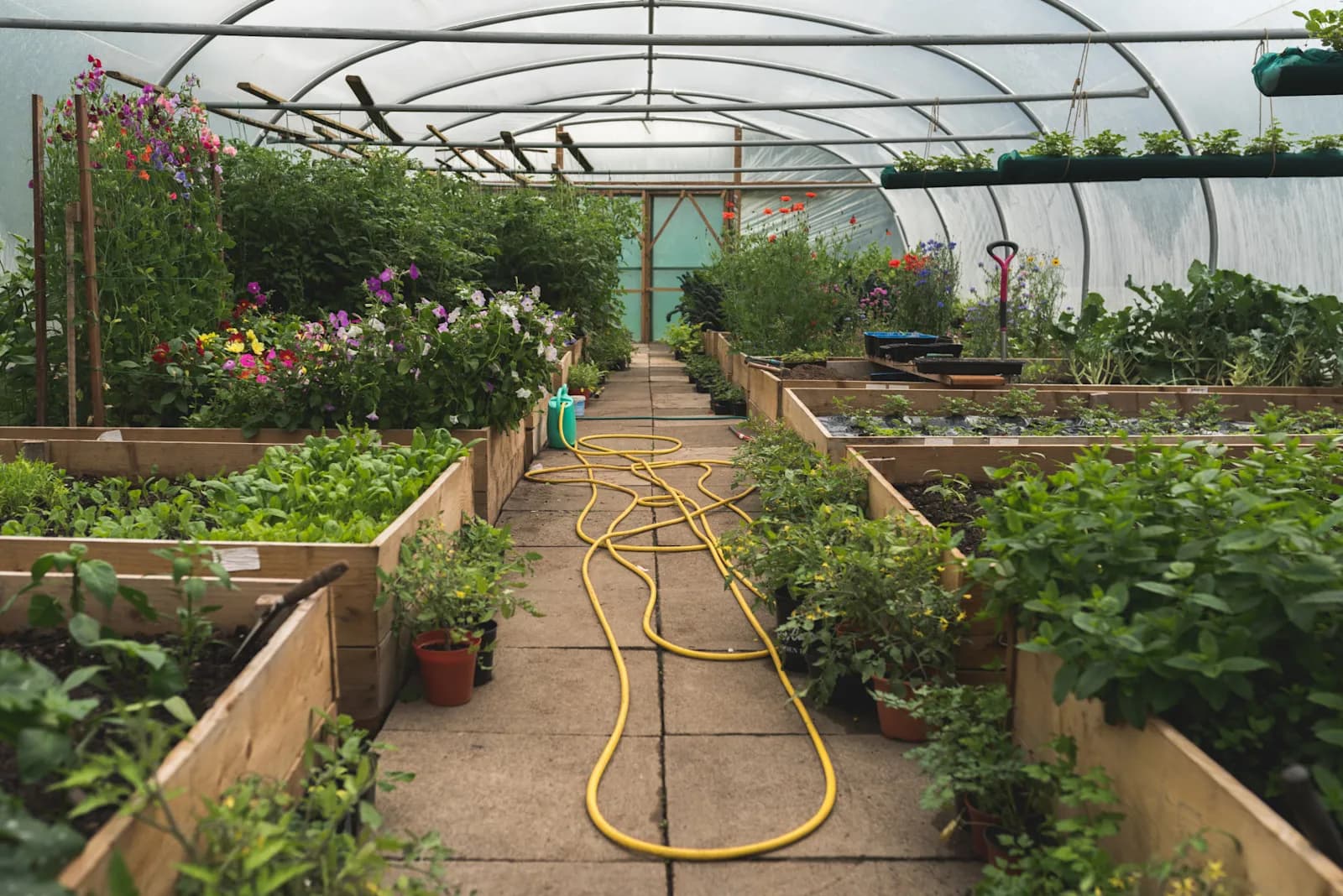
Ask the bar team where a drink starts, and the answer usually isn’t the bar — it’s the polytunnel.
On a warm afternoon, the tomato vines announce themselves before you’re through the door. Inside, sweet peas climb one side, four fig trees anchor the middle, and rocket grows thick enough to make you rethink what rocket is supposed to taste like. Nothing here is sprayed — no pesticides, no fertiliser, no herbicide — which means that whatever’s edible in the tunnel is safe to eat straight off the plant. Most guests find that out the hard way, in the best sense: a strawberry picked and eaten on the spot tastes almost nothing like the ones from a punnet.
“A cocktail menu that starts with a flavour rather than a recipe.”
Grown, foraged and fermented on the estate.
Every fermented soda behind the bar begins the same way: with something that would otherwise be wasted. The current one started as cherry syrup, left over after the cherries themselves were braised down in Guinness for another dish. Rather than let it go, it’s blended with tonka bean — an aromatic bean related to the broad bean, somewhere between vanilla and marzipan with a hint of hay and cinnamon — and set to ferment with a ginger bug, a homemade starter culture that works the same way a sourdough starter does.
The process runs in two stages. First, a demijohn with an airlock, left out to ferment openly until it’s active. Then it moves into a sealed bottle, where the carbon dioxide has nowhere to escape and dissolves into the liquid instead — the same principle behind bottle-fermented sparkling wine, just without the alcohol. What comes out the other end is a naturally carbonated, probiotic soda under 0.5% ABV.
Further into the tunnel is cinnamon basil — not basil dusted with cinnamon, but an actual variety of the herb, planted at the bar team’s request when Andy, our gardener, asked what to grow for the season. It’s become a favourite: warm, anise-edged, unmistakably basil underneath it all.
Close by are the alpine strawberries — wild, tiny, and nothing like their commercial cousins. Where a normal strawberry sends out runners to spread, alpine strawberries clump inward around their own root, competing with themselves for light and nutrients unless they’re split up. The fruit is small and slightly fibrous, but the flavour is disproportionate to the size.
The garden isn’t the only source. A six-kilometre run around the lake last year turned up thirteen different wild botanicals — meadowsweet, whose name comes from its traditional use as a flavouring for mead and beer (it’s naturally rich in the same compound found in aspirin), hawthorn and elderberry (sold dried in health shops, growing wild on the trees here), and stinging nettle, whose seeds — from the female plant specifically — are considered a genuine superfood.
It’s a different kind of foraging than most people are used to. No hour-and-a-half hike up a mountain hoping something’s still in flower — just an ordinary walk, with ingredients that, as the bar team puts it, tend to find you rather than the other way round.
It’s the same principle behind the plum wine and elderflower champagne made each year from the estate’s own trees, and behind a cocktail menu that starts with a flavour rather than a recipe — infuse a gin, taste it, and build outward from there. Small-scale, seasonal, and shaped entirely by what the polytunnel and the lakeside give up that week.
Guests can see it firsthand on a walk-around with the team, included for every stay, with botanical workshops and tasting sessions available for smaller groups who want to go further.
Walk the polytunnel, forage the grounds and mix your own drinks with our bar team.